November 1995 · Bali · Indonesia
Bali
A boat of candles set alight in the dark, a sarong swapped for blue jeans by a stranger in a market, a driver and guide for five dollars a day, and thirty metres down a wall in a national park.
Scroll ↓
A boat of candles set alight in the dark, a sarong swapped for blue jeans by a stranger in a market, a driver and guide for five dollars a day, and thirty metres down a wall in a national park.
In Australia I asked people where they went on holiday, and every one of them said the same word without pausing to think about it: Bali. So the following year I went.
You can pick out the Australian bars straight away. They are loud, they talk funny and they smell of fish and chips.
Indonesia is one of the most populous countries on earth and has a very large Muslim population. Bali is mostly Hindu, and the two get along quite nicely here. That is not true everywhere in the archipelago — there are islands with serious trouble along the same seam — which makes what Bali manages worth noticing rather than taking for granted.
I came in from the airport in jeans and a tee shirt and started walking down towards the water, where a considerable crowd had gathered. It was already dark. There was a boat at the edge of the sea, beautifully made and loaded with candles and with rice cakes of every imaginable kind, and at some point in the evening it was set alight and sent off.
It was a powerful and moving thing to stand in the middle of — an expression of prayer, and of light over darkness, in a language I had none of.
Getting there, I passed through an open-air market, where a woman speaking very fast in that same language looked at me once, took my trousers off me on the spot and put a proper sarong on me instead. Sometimes a traveller needs a little cultural awareness applied externally.
The hotel recommended a young man, and he offered to be my chauffeur for the week. It was the best single decision of the trip. He taught me the history and the culture as we went, and he kept me out of trouble with the local authorities, which turned out to be a real service and not a joke.
Driving around Ubud is an acquired taste. People drive as though there were no tomorrow, and yet there are very few accidents. There are also a great many unwritten rules — unmarked toll roads, for instance, where the toll is that you stop at a particular roadside temple and pay. A local driver is worth every one of the five dollars.
He did, of course, steer me towards the markets where his family did business, and so I met his mother, his father and his sister. That was not a cost. That was the trip.
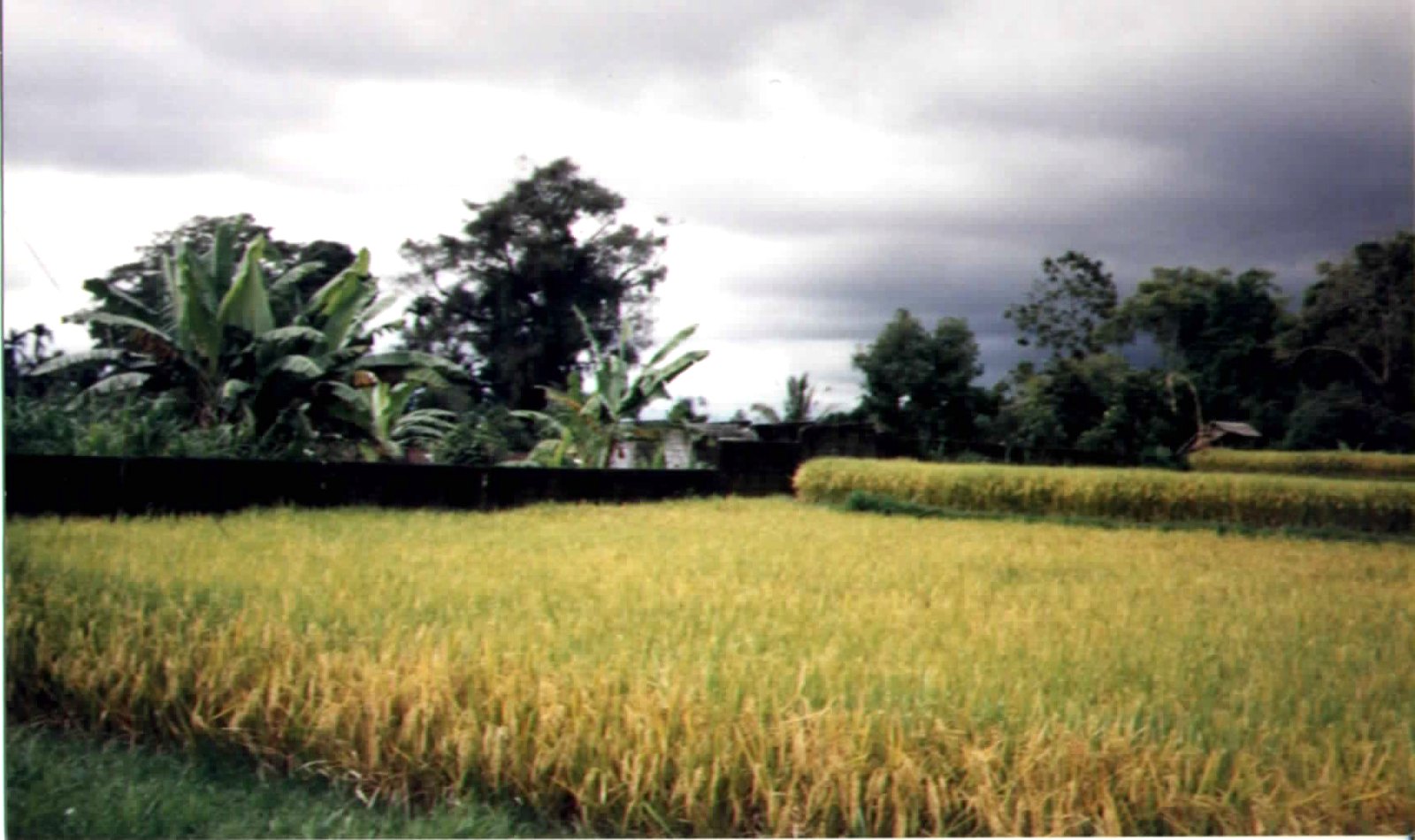
Between the towns it is rice, all of it, in every state at once: flooded and mirror-flat with the seedlings just in, half grown and green, or standing gold and ready to cut. The terraces are worked by tenant farmers who live on them the year round, and the whole system runs on water shared down the hill by agreement rather than by pipe.
Owning a cow is the mark of a family that is financially secure, and a cow is a dowry for a daughter. The animals live better than you might expect — in a byre of bamboo under a thick thatch, out of the sun.
And everywhere along the road, shrines: a gateway, a stone seat for the spirit of the place, a pair of ceremonial umbrellas, offerings left that morning and already being eaten by the ants. You stop. You put something down. You go on.
He was outside the hotel every morning, and one of those mornings he came with me on the walk up into the volcanic highlands to the crater lake.
It is a long green climb, through forest and past the last warung where the dogs lie in the road, and then the country opens and there is the lake sitting in the crater with cloud coming over the far rim. There were fishermen out on the rocks along the shore and one outrigger a long way out with a red sail up. On the way there were monkeys, panhandling with professional persistence.
We stopped at houses along the way, because he knew people along the way. That is the difference between being driven somewhere and being taken somewhere.
This is the original and still the best of the good-against-evil serials — a Marvel run several centuries early, staged in an ancient Hindu temple with an audience sitting on the grass in front of it.
The Barong is the lion-like creature that stands for good; Rangda is the witch who stands for the other thing. Neither wins. That is the point of it: the two are held in balance, and the performance ends with the balance restored rather than with a victory. In the middle of it the Barong's followers turn their kris — the wavy daggers — against their own chests, and are protected.
The temples themselves are worth the trip on their own: split gates, stone guardians, tiered shrines and courtyards kept like gardens, all of it carved out of a soft grey volcanic stone that grows moss almost as fast as it is cut.
I fell in with an American import-export couple, and the man's sister became my dive partner. This was my first wreck dive, and it was the trip on which I understood properly what the buddy system is actually for.
Two days at Menjangan, off the north-west corner of the island: forty minutes the first day and fifty-seven the second, thirty metres down, twenty-five degrees, fifty feet of visibility. The logbook remark for both is the same two words — coral reef — which does not begin to cover a wall that drops away under you into blue.
Getting there was half of it. We went out in a rickety long boat, and at one point the pilot simply went over the side in mid-channel to chase a sea turtle that had swum past. On the way we dropped off a passenger: an old man whose job was guarding a small island against dynamite fishermen. He had a lunch bag and a transistor radio, and that was the whole of the equipment.
Denpasar is the main city and the place the aeroplane puts you down; from there you make your way up to Ubud, or out to one of the resort towns, and mostly you do not go back. One night I went into town anyway, for ice cream, which is as good a reason as any to see a city.
And then back out along the roads in the dark, stopping at the side-road temples, eating rice cakes.